
Communion of Saints:
Role of Icons Is the Prayer Life of the Eastern Church
A Solo Exhibition by George Ziobro
January 2-31, 2024
Parish Hall and Online
Workshop/Retreat
January 26-28, 2024
Parish Hall
-
Painting icons is a form of prayer.
~ George ZiobroThe Arts & Faith Ministry is pleased to offer a month-long exhibition of the work of “icon writer” George Ziobro.
To “write icons” is to engage in the still-living art practice of interpreting and rendering visually – in form, color, and story – scriptural content. (In Greek, the word for icon, separated into two words, means “holy” or “not of this world” and “to write.” See: “Why Icon Writing and not Painting?”) As a method of representing the heavenly, the craft of icon writing reflects theology as well as canonical and stylistic traditions that are centuries-old; while preserved by, and associated with, Eastern churches, icon writing has been adapted to religious and devotional traditions of Western Christianity.
This video offers exhibition viewers a brief history of this sacred art form. In writing icons, practitioners either work from (that is, copy) outlines or create their own original images. The images might represent, for example, Jesus Christ, the Virgin Mary, the Holy Trinity, saints, angels, or events. The materials used usually are acrylic paints, egg tempera, wax and encaustic, or mosaics. Most of the icons in the exhibition have been written with egg tempera. A workshop that accompanies this show includes examples of icons in various stages of completion.
To aid viewers, George has prepared for and posted near each exhibition icon a brief description that includes a short biography of the saint or Bible setting depicted and a graphic of where the icon would appear on an iconostasis in an Eastern church. (An iconostasis, which may be constructed as a solid screen of stone, wood, or metal, physically separates the sanctuary from the nave.)
Used by the Orthodox Church to assist in worship, icons provide a “window to heaven” – a means to help focus attention on the divine; they themselves, however, are venerated only.
Maureen Doallas
Curator and Founder
Arts & Faith Ministry -
I have been fascinated by icons from an early age, having seen them in various churches where I grew up.
My career was anything but that of an artist. I was a food chemist and, when an opportunity came allowing me to learn how to write icons, I jumped at it, and I have pursued it as a hobby ever since. I have taken courses from teachers from Russia, Belarus, France, England, and the United States.
A chemist, I experimented. I still experiment. No two of my icons are the same because I am constantly experimenting with materials, colors, and painting styles. Like all experiments, some of mine succeed and some, well. . . The one constant in my work is that I try to stay true to Eastern churches’ canon for iconography.
Painting icons—or icon writing, as it is known—is a form of prayer. You cannot work on an image for 20 hours to 100 hours without also reflecting on the scene or the saint and the importance of either to the Christian faith community. Each brush stroke in icon writing incorporates not only my hopes, joys, and sorrows but also the hopes, joys, and sorrows of the people for whom I pray.
A Note on the Exhibit Title
I chose as the title of my exhibit “Communion of Saints: Role of Icons is the Prayer Life of the Eastern Church.” This title emphasizes that icons are not just “pretty pictures”; rather, they play a significant part in the prayer life of the faithful. In the Nicene Creed, we profess our belief in the communion of saints. St. Paul repeatedly called the believers in Christ, saints.
Just as we treasure the photographs and stories of parents, grandparents, and other members of our respective families, we members of the Christian community use icons to remind ourselves of all those of blessed memory who came before us, who gave witness to their faith in God, and who attested to their dedication to the Christian faith.
George Ziobro
Icon Writer -
George Ziobro’s career has been anything but that of an artist: he was a food chemist. When an opportunity arose allowing him to learn how to write icons, which have fascinated him since early childhood, George jumped at it and has pursued icon writing as a hobby ever since.
Now both artist and world traveler, George has taken courses from icon-writing masters from Russia, Belarus, France, England, and the United States.
-
This section provides the title of each icon viewable in the parish hall, as well as the medium the artist used in the icon’s creation.
The titles are listed alphabetically.
Viewers will find in the parish hall next to most of the icons a card with a brief biography of the saint or a description of the event or Bible setting depicted. This information is intended to help viewers understand the importance of the icons in liturgical and daily life.
The artworks are from the artist’s personal collection and so are not available to purchase.
“Annunciation (Virgin at the Loom),” Acrylic
“Archangel Gabriel,” Egg Tempera
“Archangel Michael,” Egg Tempera
“Crucifixion,” Egg Tempera
“Face of Jesus,” Encaustic (Wax)
“Jesus Christ (Head), Mosaic
“Holy Trinity,” Acrylic
“St. Anne & St. Mary,” Egg Tempera
“St. George,” Acrylic
“St. George & St. Theodore,” Egg Tempera
“St. Geronius,” Egg Tempera
“St. John the Evangelist,” Egg Tempera
“St. Luke,” Egg Tempera
“St. Margaret of Scotland & St. Timothy,” Egg Tempera
“Six-Winged Seraphim,” Egg Tempera (Black/White)
“Six-Winged Seraphim,” Egg Tempera (Color)
“Three Men in the Fiery Pit,” Egg Tempera
-
This section provides a selection of artists currently working in the art of icon writing. The names are hyperlinked directly to Website information providing a biography.
A number of interesting icon-writing-related articles are listed. These include articles for both academic and lay audiences. This section is followed with a short list of professional organizations for icon writers.
Also provided are centers of study or locations where icons are on view, as well as a selection of instructional or other videos about icons.
Icon Artists
Angela Manno, “Contemporary Icons of Threatened and Endangered Species”
Icon-Writing-Related Articles
Dana Blouch-Hanson, “The Spiritual Art of Writing Icons”
Gary Neal Hansen, “Writing an Icon (The Writer’s Inner Life),” Blog, January 30, 2017
“Sharon Henthorn-Iwane: Encountering the Faithful Icon,” Radix Magazine, August 7, 2023
“Holy Work, Divine Rules of an Iconographer”
“How an Icon is Painted,” Monastery Icons (Text and Video)
John A. Kohan, “On the Border of East and West: Searching for Icons in Lviv,” Image Magazine, Issue 96
Sarah Rose Sharp, “The Artist Painting Icons of Earth’s Endangered Species,” Hyperallergic, February 17, 2023
Julia Stankova, “A word about the Word,” ArtWay (About Stankova’s relationship to iconography)
“Writing Icons,” PBS Religion & Ethics Newsweekly, April 9, 2004
Gil Zohar, “Bethlehem Icon Center Keeps Alive an Ancient Artistic Tradition,” Episcopal Journal & Café, July 4, 2023
Iconographers’ Professional Organizations
American Association of Iconographers
Other Iconographic Resources
The Icon Museum and Study Center
Icons and Their Interpretation
Videos
“Icons in the Modern World: A New Way of Seeing” (Museum of Russian Icons)
“Icon Painting Demonstration with Aidan Hart” (Egg Tempera Techniques)
“Icons at Sinai Monastery” (St. Catherine’s Monastery), Mt. Sinai, Egypt
“The Blessing of the Icon ‘Mama’“ (Holy Communion Episcopal Church, St. Louis, MO)
“Unveiling the Good Shepherd Icon” (The Episcopal Church of the Good Shepherd, Athens, OH)
images
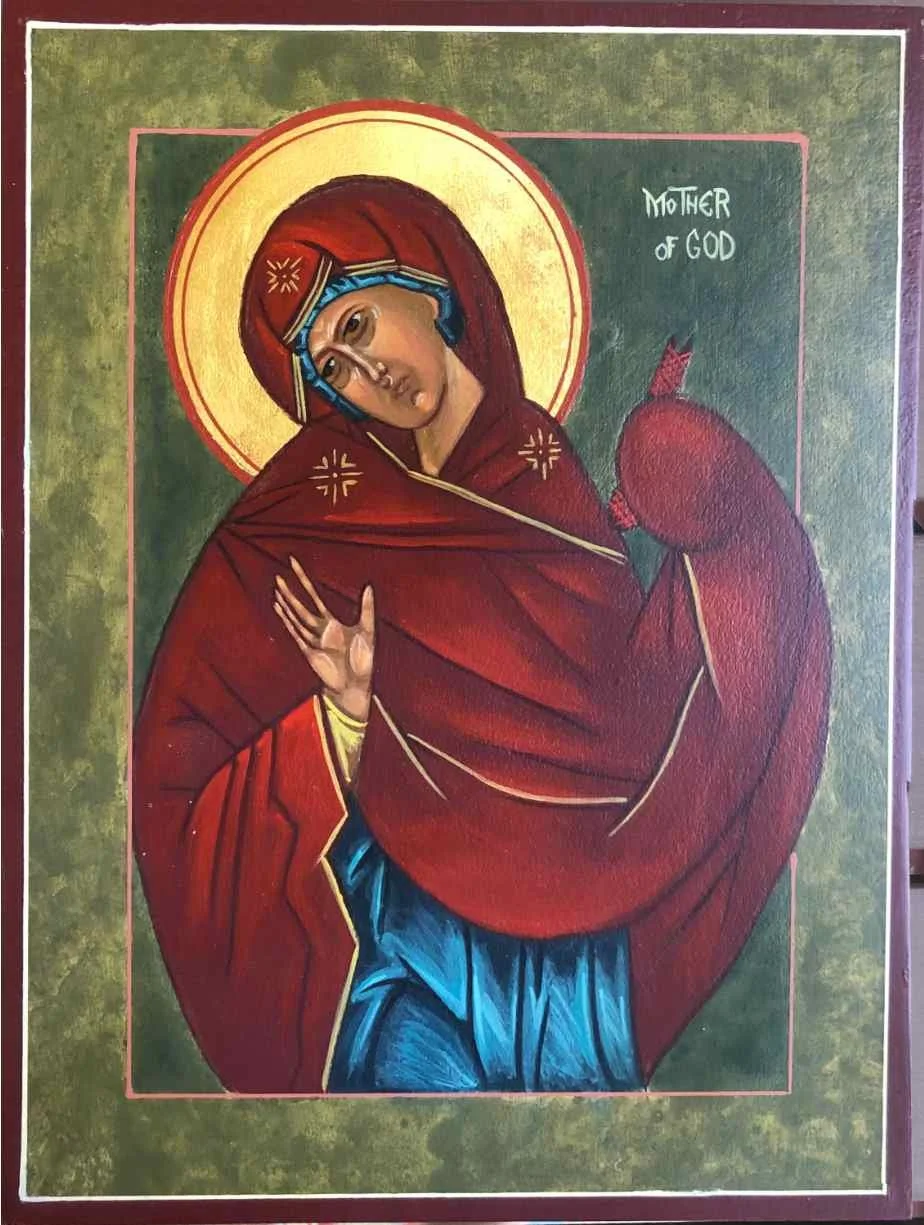
“Annunciation (Virgin at the Loom)”
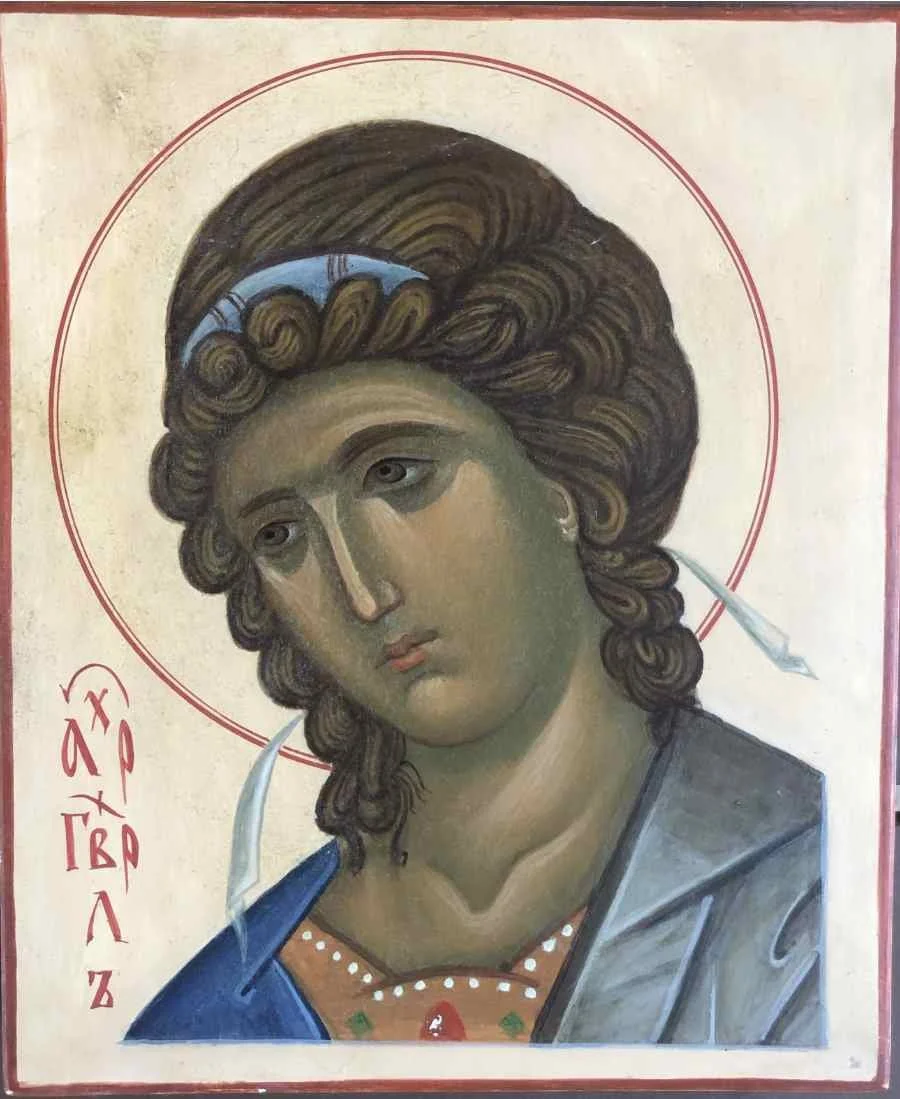
“Archangel Gabriel”
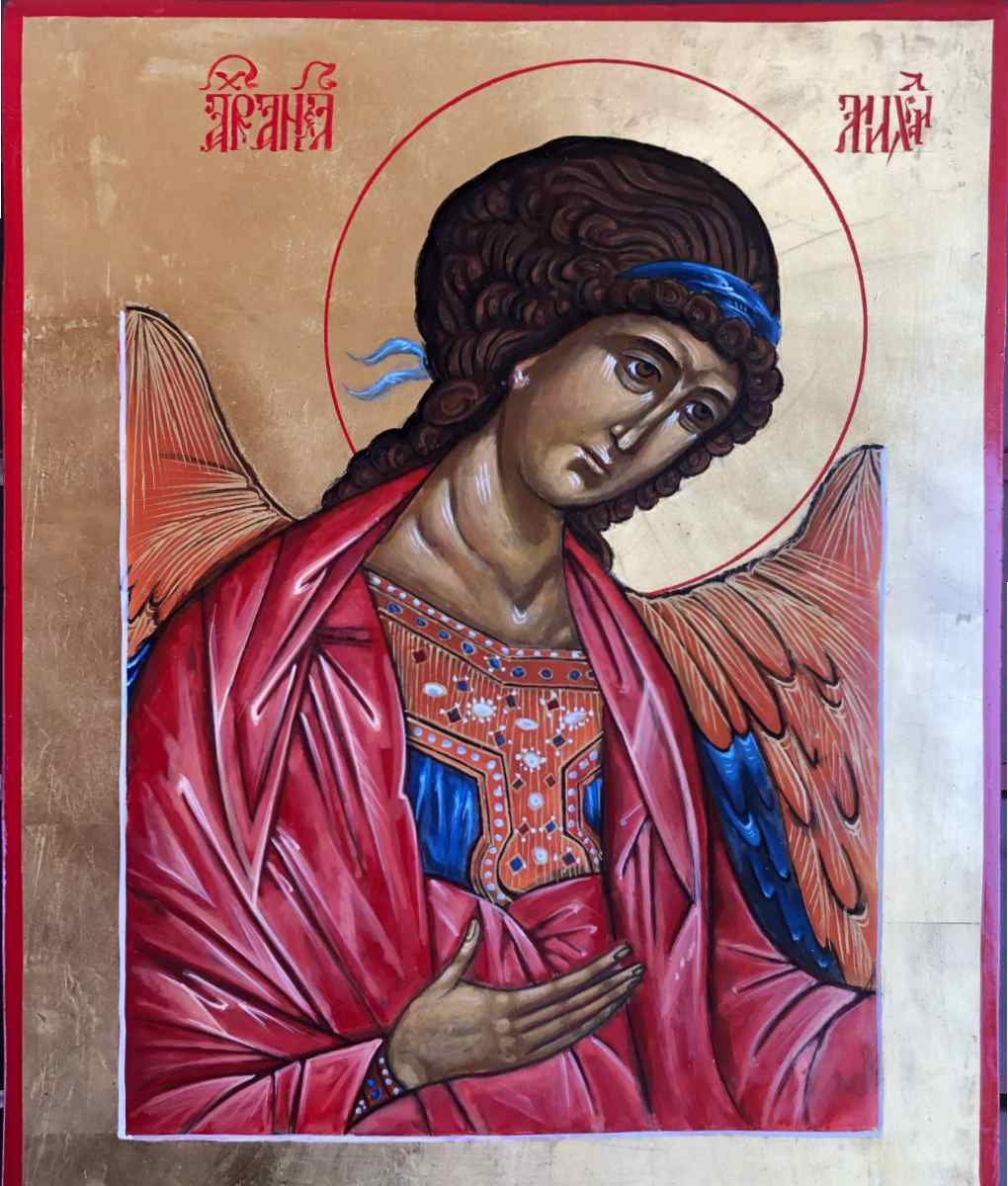
“Archangel Michael”
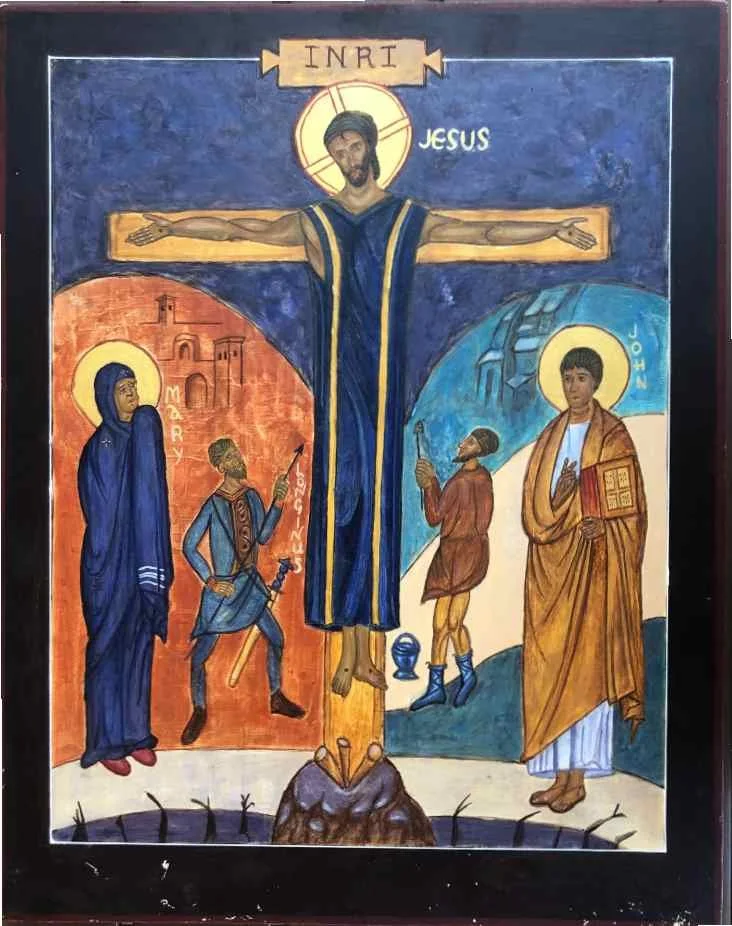
“Crucifixion”
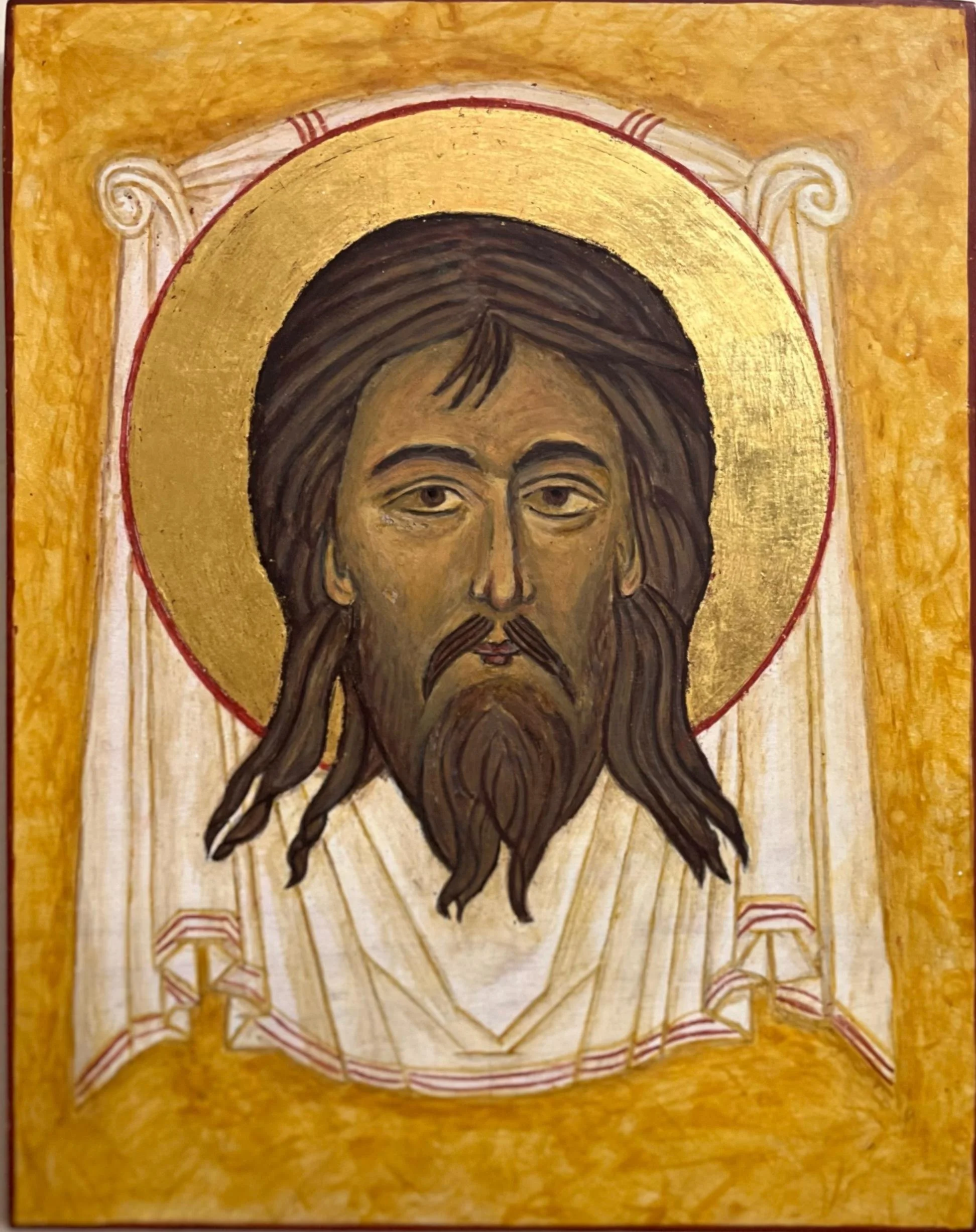
"Face of Jesus"
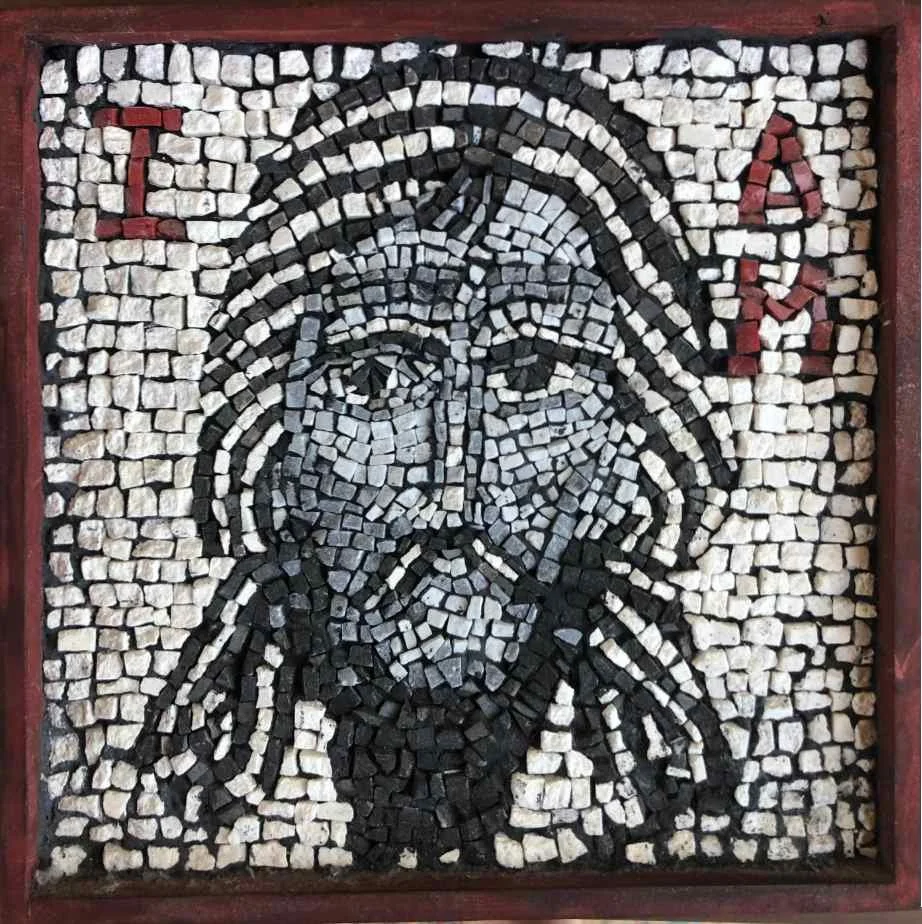
Jesus Christ (Head)
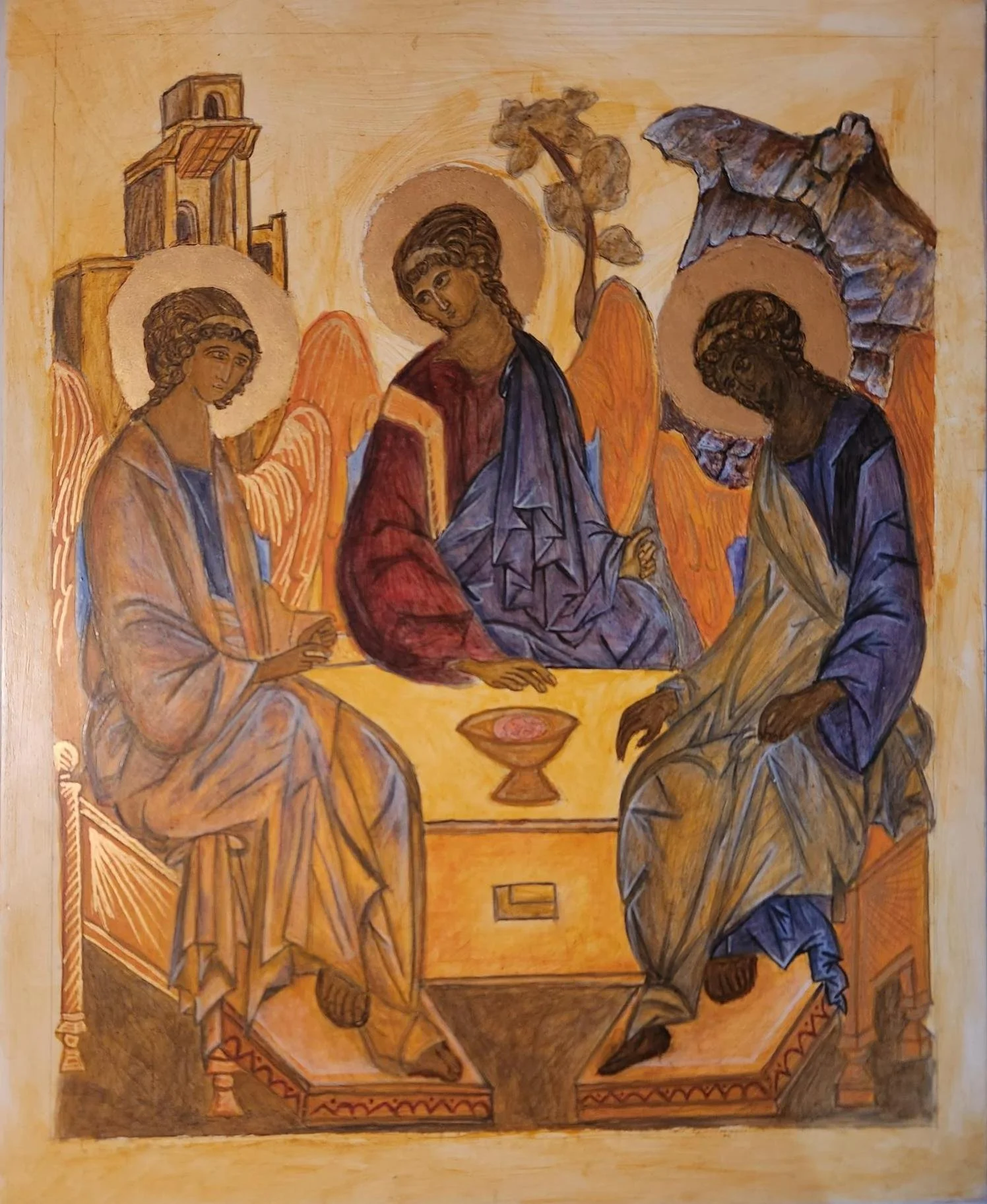
"Holy Trinity"
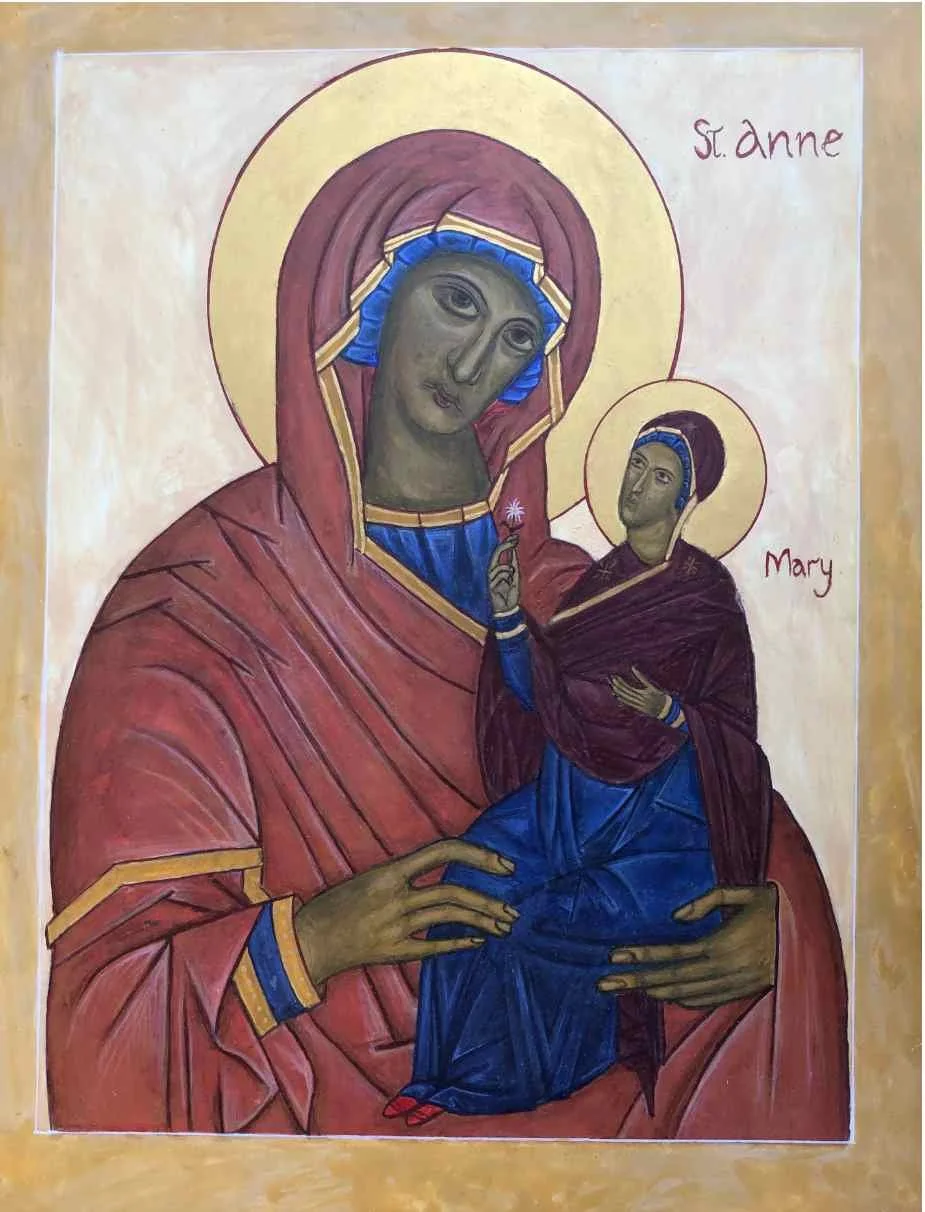
“St. Anne & St. Mary”
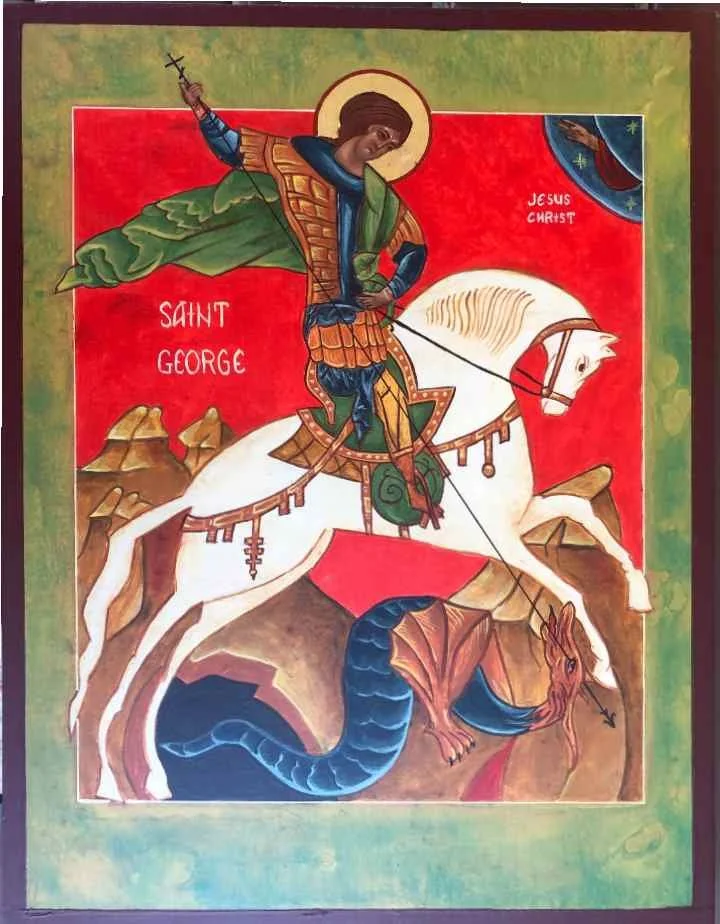
“St. George”
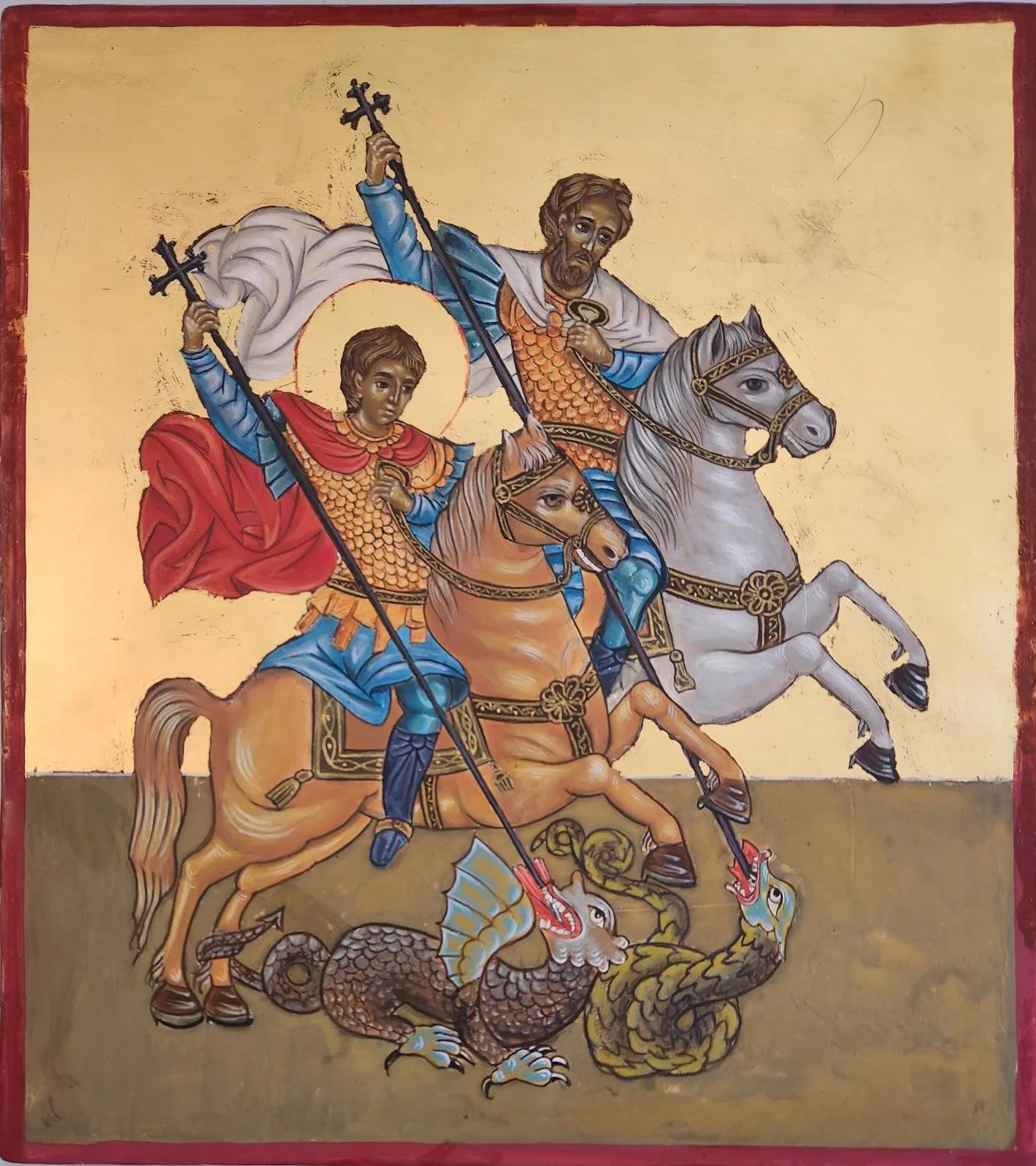
“St. George & St. Theodore”
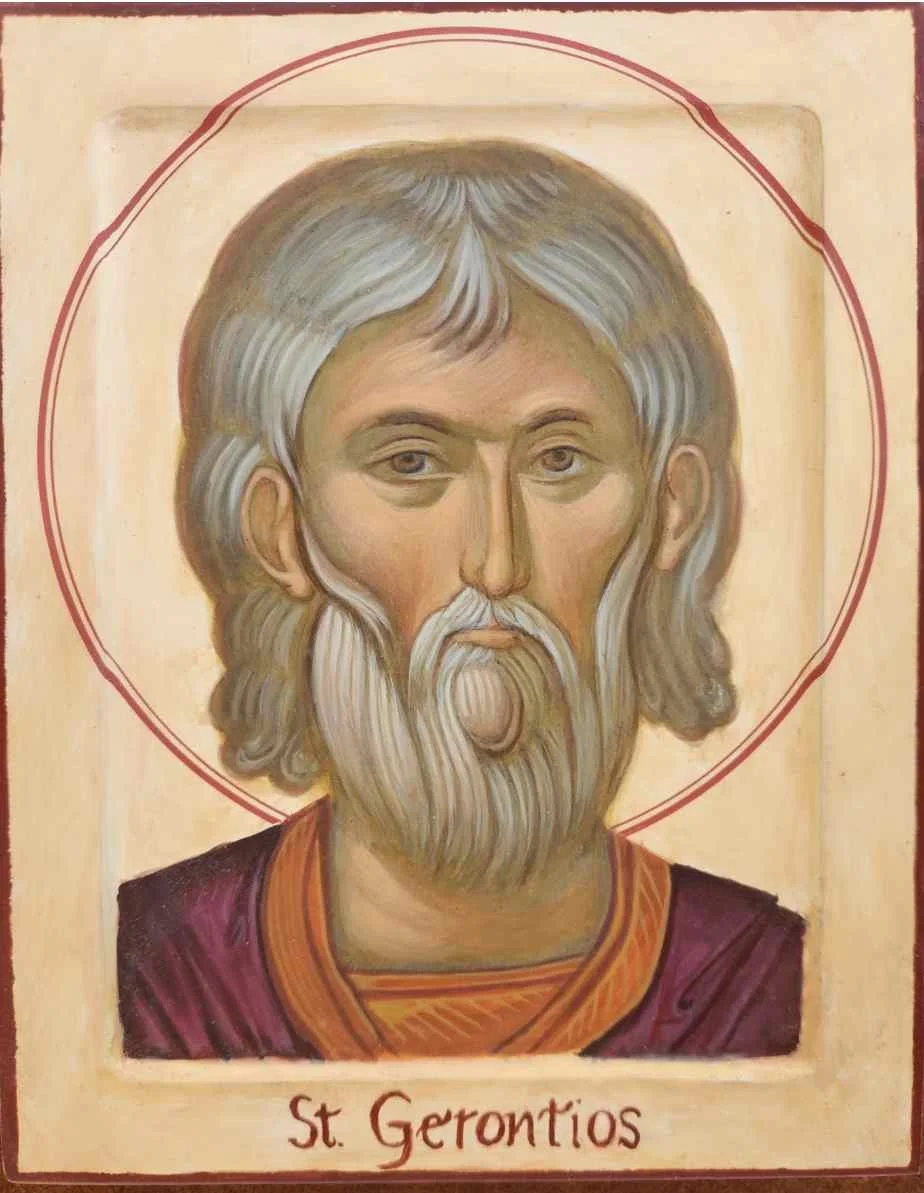
“St. Geronius”
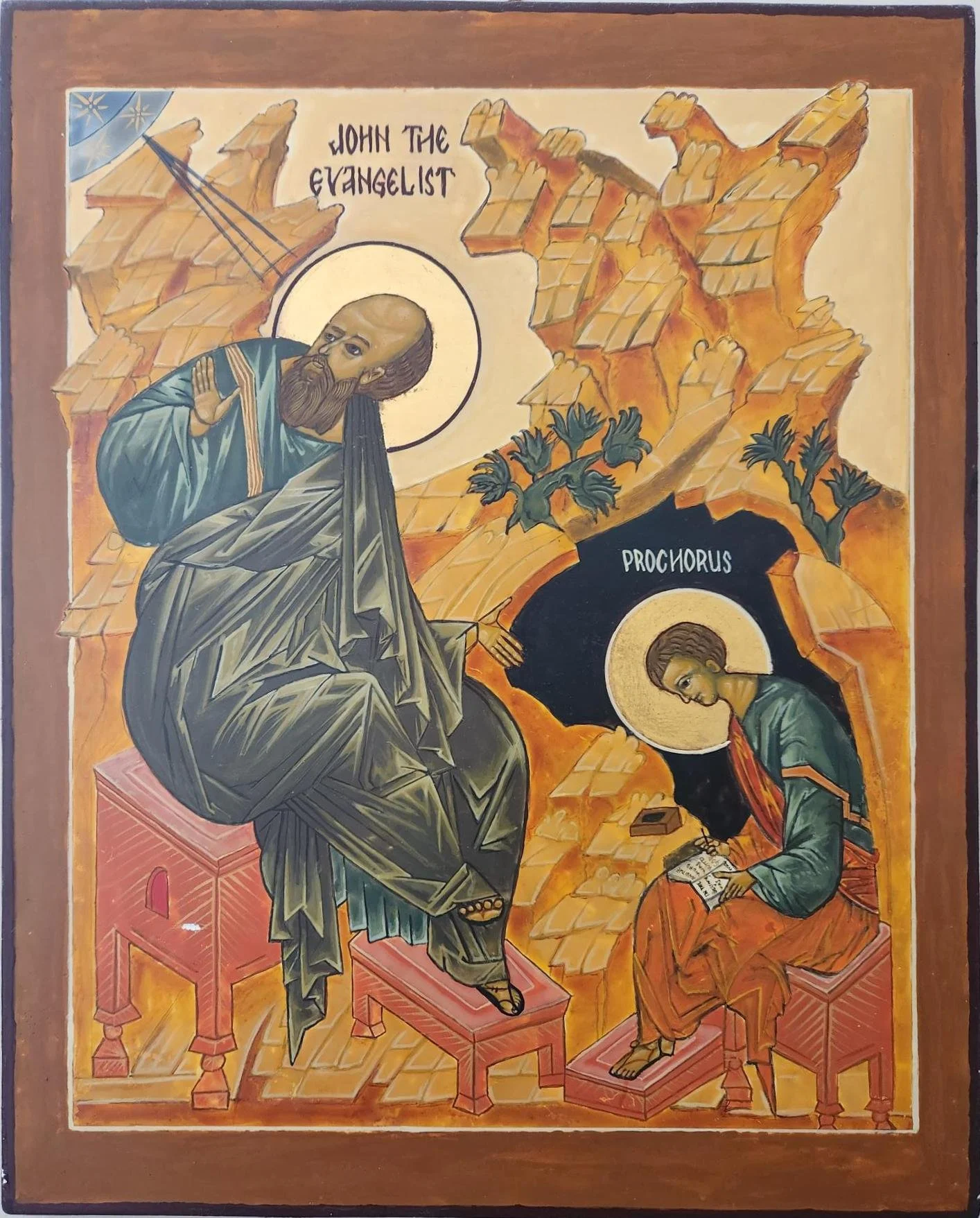
“St. John the Evangelist”
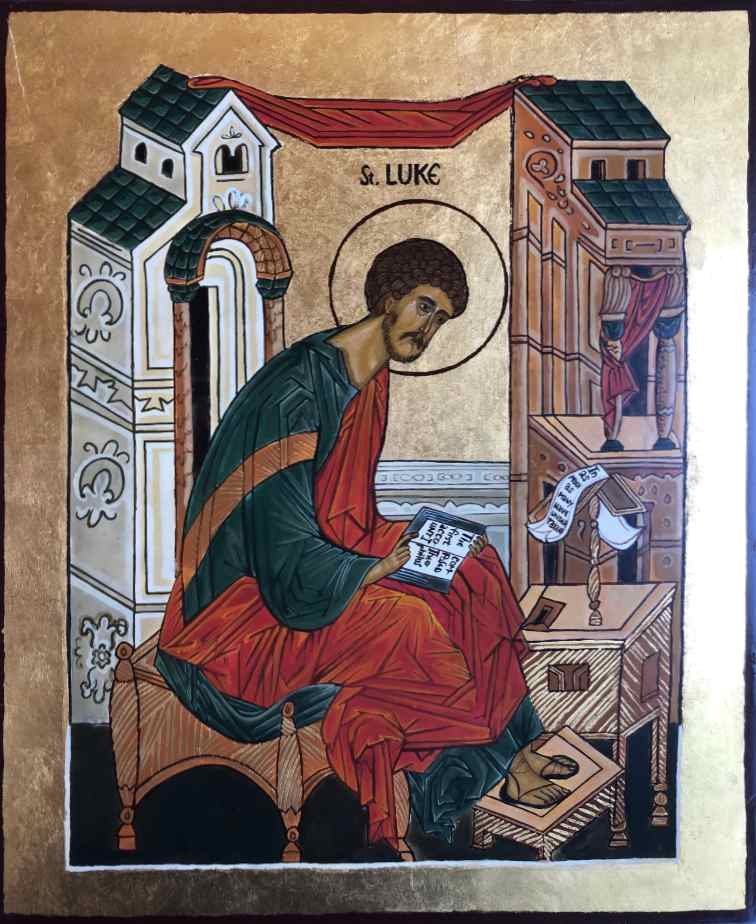
“St. Luke”
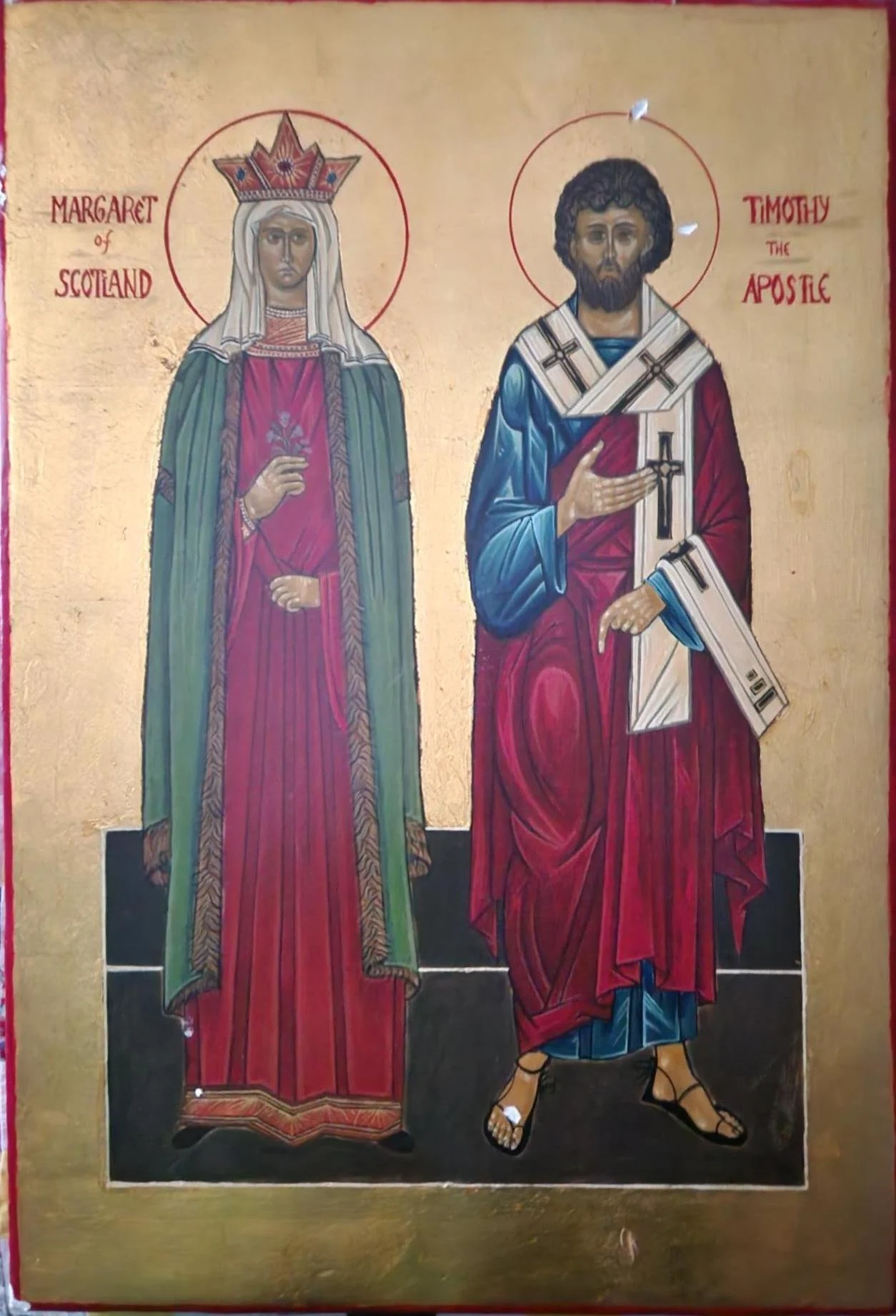
“St. Margaret of Scotland & St. Timothy”
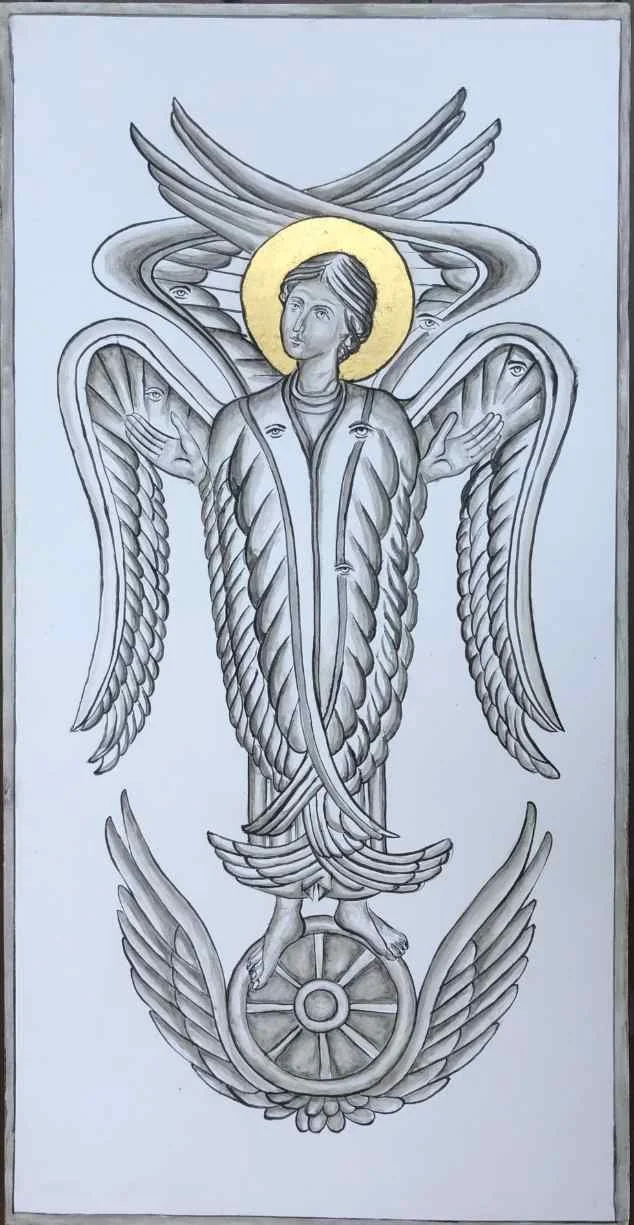
“Six-Winged Seraphim” (Black/White)

“Six-Winged Seraphim” (Color)
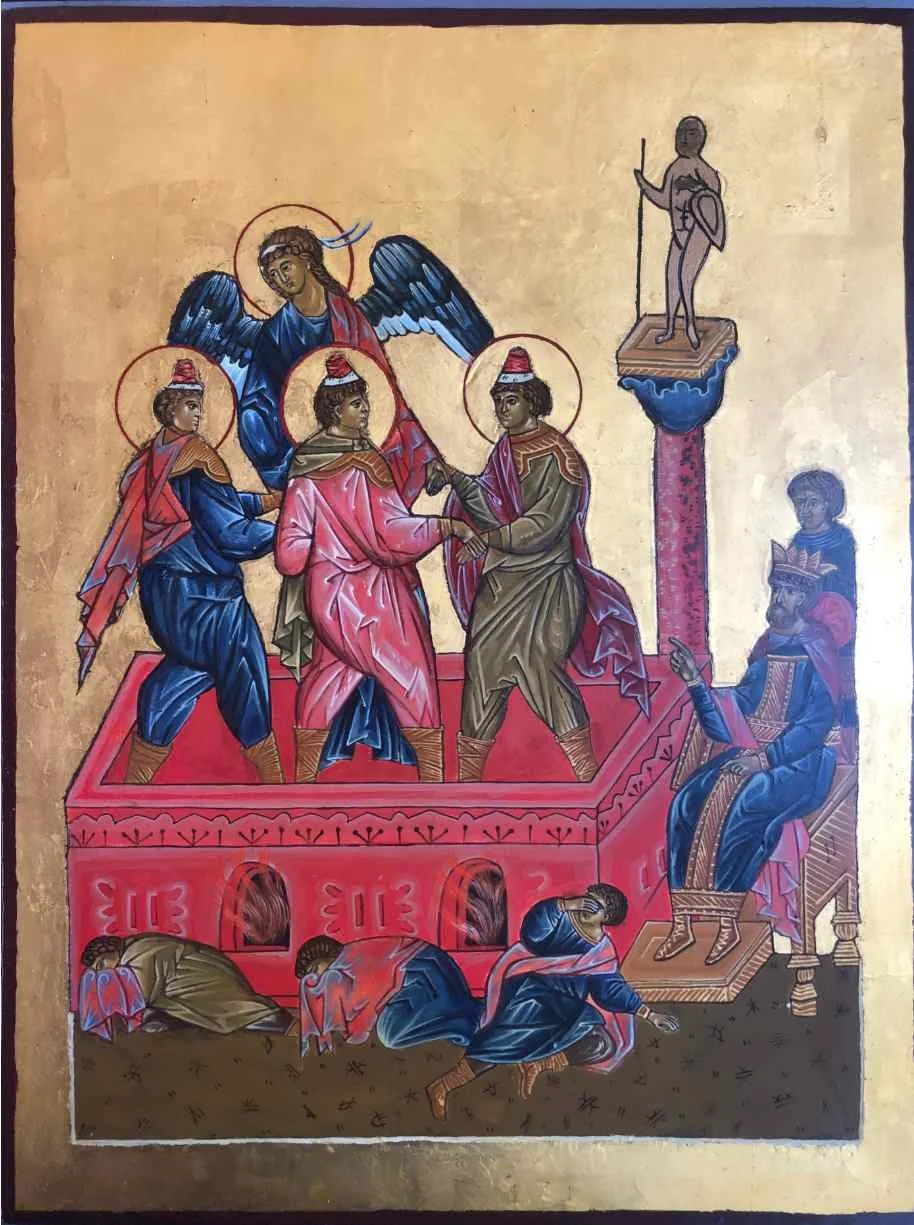
“Three Men in the Fiery Pit”